
Traders suspect The Reserve Bank of India (RBI) bought bonds and actively intervened in the rupee to support sentiment.

India is more insulated to Fed-related volatility than other emerging markets due to its better economic fundamentals

India's central bank kept its key repo lending rate unchanged at 6.75 percent on Tuesday.

The government needs to take positive action to reaffirm that story.

Rupee and bonds weakened on Thursday after the US Federal Reserve signalled it may increase its policy rates at the next meeting in December.

S&P expects India to grow at 7.4 per cent in 2015, similar to the central bank's forecast for the fiscal year ending in March.

A Reuters poll showed only one out of 51 economists had expected a 50 basis points rate cut.

Forex market was closed on Thursday on account of Ganesh Chaturthi.
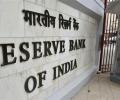
Lending rates have to be sensitive to the policy rate, says RBI.

The rupee has fallen more than 2 per cent against the dollar since the yuan devaluation

Balance of payment stood at a surplus of $30.1 billion during January-March

A gradual weakening of the rupee, however, may add to inflationary pressures.

The RBI chief was speaking to researchers at an analyst call.

RBI governor does not want to move in haste for achieving financial inclusion.

Rajan also said weak results from India's corporate suggested final demand is yet to pick up strongly.

The new bond was changing hands at 7.72 per cent.

Rajan was speaking at a news conference.

Traders believe the RBI will step in more strongly, if the rupee starts falling towards 65

'Both IIP and CPI inflation numbers are showing a huge disconnect from the leading indicators.'

S&P warned about spending on subsidies and heavy government debt.
 © 2026 Rediff.com - Investor Information - Advertise with us - Disclaimer - Privacy Policy - Sitemap - Feedback - About us - Terms of use - Grievances